AMD has introduced the latest entry to the AMD Embedded G-series processor family with the AMD Embedded G-T16R accelerated processing unit (APU) and the AMD G-T16R is targeted at very low power, small form factor and cost-sensitive embedded designs that require a combination of x86 compatibility and graphics. The optimized design of the AMD Embedded G-T16R sips power with power consumption of just 2.3 watts on average or 4.5 watts thermal design power (TDP) and these new chips continue the trend of including a multi-core x86 CPU and GPU to ensure compatibility between legacy, current and future technologies. The company has also extended the platform's life until 2017, adding a further five years to its expected lifespan.
AMD introduced the latest entry to the AMD Embedded G-Series processor family with the AMD Embedded G-T16R Accelerated Processing Unit (APU). The AMD G-T16R is targeted at very low power, small form factor and cost-sensitive embedded designs that require a combination of x86 compatibility and graphics. The optimized design of the AMD Embedded G-T16R sips power, with power consumption of just 2.3 wattsiv on average or 4.5 watts thermal design power (TDP). Embedded product designers are taking to the industry's green challenge to design a broad range of next-generation applications for the industrial control, point-of-sale, medical appliance and transportation markets. For example, industrial customers can use the APU to help create greener factories based on more power-efficient factory hardware. Additionally, embedded designers can develop applications like point-of-sale order entry stations and tablets, medical bedside terminals and even solar-powered traffic control devices using the AMD G-T16R. The new AMD Embedded G-Series APU also offers embedded product designers a seamless upgrade path for legacy application. Fits into small form factor boards by implementing a two-chip platform, the APU and its companion controller hub. Legacy I/O card support based on a full 32-bit PCI interface and an ISA bus solution with DMA support. Support for a full range of display technologies, with analog VGA and LVDS support for legacy applications and DVI, HDMI and DisplayPort interfaces for the latest display technology. "It's critical that the latest AMD Embedded G-Series APUs provide compatibility with existing x86 processors while supporting the latest interface technologies," said Jim McGregor, principal analyst of TIRIAS Research. "Having a simple migration path allows engineers to develop robust designs using the latest DVI, HDMI and DisplayPort display technologies." There are already more than 50 standard form factor motherboards available supporting the AMD Embedded G-Series platform, ranging from the small Qseven computer-on-modules to the versatile and widely available MiniITX form factor. This enhanced compatibility provides original equipment manufacturers (OEMs) with a variety of board options to design into their system solutions. The platform consists of both the APU and its companion controller hub, which have a total combined footprint of just 890 mm2 – approximately the size of a square inch. The AMD Embedded G-T16R APU is designed to help reduce product development and life cycle costs through a common scalable platform design that spans the entire AMD Embedded G-Series. AMD's unique approach enables one design to serve multiple product configurations, simplifying the supply chain, helping reduce operational complexity and enabling better platform economics. The AMD G-T16R APU is also available at extremely accessible price points, allowing designers to easily incorporate it into cost-sensitive embedded applications. "With the AMD G-T16R APU, we were striving for that critical balance of performance, power efficiency and cost for power, and cost-sensitive embedded applications, and we've achieved it," said Arun Iyengar, corporate vice president and general manager, AMD Embedded Solutions. "This new APU helps to enable small form factor and fan-less designs with power consumption of just 2.3 watts on average." For users of the AMD Geode LX processor family, the AMD G-T16R APU offers a cost-effective upgrade path, consuming about seven percent less power and three times the performance of the 2.45 watt AMD Geode LX processor, while reducing the overall chip footprint by 58 percent. Support for the latest DDR3 memory helps reduce memory costs for legacy applications while enabling higher memory speed and capacityv. The AMD Embedded G-T16R APU supports Windows Embedded Compact 7, Green Hills INTEGRITY and Express Logic ThreadX operating systems, allowing applications that leverage these popular embedded and real-time operating systems to easily migrate to the new platform. Along with the announcement of the new AMD G-T16R APU, AMD is also extending the planned availability for the entire AMD Embedded G-Series processor family through 2017, resetting the five-year clock for both existing and new designs.
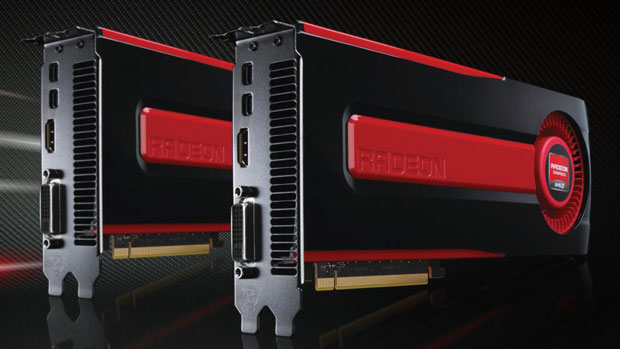
AMD announces next-gen Radeon HD 7970 for $549 and it's AMD's first 28nm GPU. This new card uses the Tahiti XT GPU, which aside from being built on 28nm process also uses the brand new AMD Graphics Core Next architecture and Graphics Core Next (GDC) is a revolutionary new architecture that eliminates the previous VLIW design for a non-VLIW SIMD engine. AMD Randon HD 7970 includes 768KB of L2 cache and eight render back-ends capable of pushing 32 color ROPs per clock and 128 Z/stencil ROPs per clock cycle. AMD hopes to make the card more practical than the dual-processor 6990 by bringing the card's power consumption down to less than 300W under load and a mere 3W in 'long idle' mode, and promising quieter cooling thanks to improved airflow and a bigger fan. We'll have to wait for benchmarks in January before we hand out any medals, but in the meantime NVIDIA's forthcoming 28nm Kepler GPU might want to step up its training schedule and each of AMD’s GCN Compute Units accesses a dedicated L1 read/write cache. Each group of four units shares a 16KB instruction cache and a 32KB scalar data cache.
AMD launched the AMD Radeon HD 7970 graphics card for desktop PCs, introducing the world's fastest single GPU graphics card and the only GPU based on 28nm production technology. With the arrival of the AMD Radeon HD 7970, AMD has unleashed its revolutionary new Graphics Core Next Architecture that enables new levels of gaming and compute capabilities – realizing an improvement of over 150% in performance/sq mm over the prior generation. Engineered with support for PCI Express 3.0 and AMD CrossFire technology, the AMD Radeon HD 7970 graphics card arrives prepared for the next generation of gaming. "True to the adage, "never settle," AMD is once again aggressively advancing the state of the graphics industry – this time with the arrival of the world's fastest single GPU graphics card, the AMD Radeon HD 7970," said Matt Skynner, corporate vice president and general manager, GPU Division, AMD. ―"This graphics card represents a revolution in the graphics industry. To put it bluntly, at 28 nm the AMD Radeon HD 7970 changes everything!" AMD further extends its GPU leadership with the AMD Radeon HD 7970 through AMD App Acceleration, which enables exquisite high-definition video images and exceptional performance improvements for everyday applications. Ground-breaking advancements with AMD Eyefinity technology enable gamers and desktop enthusiasts to connect up to six displays to one graphics card, delivering immersive stereoscopic 3D experiences and astonishing 16k x 16k display resolutions. It's also armed with the latest PCI Express 3.0 standard to enable uncompromised image quality, and is additionally equipped with GDDR5 memory, enabling accelerated GPU performance. Through its intelligent AMD PowerTune and AMD ZeroCore Power technologies, the AMD Radeon HD 7970 enables higher performance levels while maximizing power efficiencies.
"The AMD Radeon HD 7970 is an awesome tool in any gamer's arsenal," said Johan Andersson, Rendering Architect at DICE. ―"We have worked closely with AMD during the development of the Frostbite 2 game engine to take full advantage of AMD Eyefinity multi-display technology and DirectX 11 for a more realistic, entertaining and visceral gaming experience in Battlefield 3." The AMD Radeon HD 7970 is available January 9, 2012 from retailers worldwide, with select models starting at $549 US SEP.
Efficient Architecture for Leading DirectX 11 Performance:
New architecture for greater performance: AMD has further enhanced its GPU design efficiency through the introduction of the 28nm process technology and Graphics Core Next Architecture, realizing an improvement of over 150% in performance/sq mm over the prior generation.
Refined AMD PowerTune technology: Designed with the most advanced power management features, the AMD Radeon HD 7970 is equipped with the intelligence to convert unused power headroom into extra performance by dynamically controlling clock speeds, allowing gamers advanced performance inside of the power envelope they specify.
AMD ZeroCore Power Technology: Gamers asked, AMD delivered – the AMD ZeroCore Power technology found in the AMD Radeon HD 7970 ensures that no power is wasted when the graphics card is not in use, enabling lower idle power than any other currently available graphics card. With support for AMD CrossFire technology, AMD ZeroCore Power eliminates wasted power, as well as additional heat and noise from extra cards when you are not using them.
PCI Express 3.0: The AMD Radeon HD 7970 comes natively equipped with support for PCI Express 3.0. With world-class performance scaling, enthusiasts' GPU experience is maximized when paired with the latest platforms.
Discrete Digital Multi-Point (DDM) Audio: DDM Audio provides multiple independent audio streams for audio-capable displays via DisplayPort or HDMI signals. DDM Audio delivers unique experiences in cases where multi-display video conferencing, directional audio or multi-room entertainment hubs are being used.
Enhanced Multi-GPU Capabilities: AMD CrossFire technology is the ultimate multi-GPU performance gaming platform. Unlocking game-dominating power, AMD CrossFire technology, coupled with PCI Express 3.0, will allow for unprecedented bandwidth in TriFire and QuadFire configurations.
The Ultimate Immersive Gaming Experience and Innovative AMD Eyefinity 2.0 Technology:
Next Generation AMD Eyefinity technology: AMD Eyefinity 2.0 features all-new support for stereo 3D, universal bezel compensation, brand new display configurations and an expanded and more immersive field of view. This allows users with 2560x1600 monitors in an AMD Eyefinity 5x1 landscape configuration to achieve a horizontal resolution of 12,800 pixels, driving more than 20 million pixels of screen real estate. More than 70 game titles have been AMD Eyefinity- validated, while many are AMD Eyefinity-ready, and hundreds more are AMD Eyefinity-compatible.
DisplayPort 1.2 and HDMI 1.4a: With full support for 3GHz HDMI 1.4a and DisplayPort 1.2 HBR2, the AMD Radeon HD 7970 is set to drive next generation displays at up to 4K resolution.
3D entertainment choices with AMD HD3D technology: With the arrival of the latest in stereo 3D technology, AMD continues to deliver an enhanced visual experience on stereo 3D-capable desktops and notebooks powered by AMD Radeon graphics. The AMD Radeon HD 7970 is backed by AMD's open 3D initiative for stereo 3D gaming and Blu-ray 3D movies.
Better Performance through AMD App Acceleration
AMD App Acceleration lets you do more, faster: Enthusiasts will enjoy improved GPGPU performance and new features in many top media, entertainment and everyday productivity applications with AMD App Acceleration.
Extensive support of industry standards: AMD Radeon HD 7970 fully supports DirectCompute and OpenCL technologies, enabling broad application support today and tomorrow.
Overview:
The world’s first 28nm GPU. The revolutionary new GCN Architecture. Ready for DirectX 11. PCI Express 3.0. The AMD Radeon HD 7970 is your personal checklist for ground-breaking technology.
The next generation of AMD Eyefinity technology is here, featuring all-new support for stereo 3D, universal bezel compensation and brand new display configurations. Face it: the best just got better.
Armed with the new PCI Express 3.0 standard, multi-GPU configurations with AMD CrossFire technology are just another way to obliterate the competition with the revolutionary AMD Radeon™ HD 7970.4,5
Leave no performance behind. Get higher clocks and faster gaming with AMD PowerTune technology on AMD Radeon HD 7970 Graphics.
Fold and mine faster than ever with AMD App Acceleration powered by the unprecedented 28nm GCN Architecture.
The market isn’t ready for 4k video, but Radeon is. With full support for 3GHz HDMI 1.4a and DisplayPort 1.2 HBR2, the AMD Radeon HD 7970 is set for quad HD.
System Requirements:
PCI Express based PC is required with one X16 lane graphics slot available on the motherboard
500W (or greater) power supply with one 150W 8-pin PCI Express power connector and one 75W 6-pin PCI Express power connector recommended.
Installation software requires CD-ROM drive, a keyboard, a mouse, and a display
DVD playback requires DVD drive and a DVD
Blu-ray playback requires Blu-ray drive and a Blu-ray disc
For an AMD CrossFire system, a second AMD Radeon HD 7970 Graphics card, an AMD CrossFire Ready motherboard and one AMD CrossFire Bridge Interconnect cable is required
Use of 3 or more displays with AMD Eyefinity technology requires a DisplayPort-capable panel or an AMD Eyefinity validated dongle. See http://www.amd.com/EyefinityDongles for a list of validated DisplayPort dongles
Specifications:
Up to 925MHz Engine Clock
3GB GDDR5 Memory
1375MHz Memory Clock (5.5Gbps GDDR5)
264GB/s memory bandwidth (maximum)
3.79 TFLOPs Single Precision compute power
947 GFLOPs Double Precision compute power
GCN Architecture
32 compute units (2048 Stream Processors)
128 Texture Units
128 Z/Stencil ROP Units
32 Color ROP Units
Dual Geometry Engines
Dual Asynchronous Compute Engines (ACE)
PCI Express 3.0 x16 bus interface
DirectX 11-capable graphics
9th generation programmable hardware tessellation units
Shader Model 5.0
DirectCompute 11
Accelerated multi-threading
HDR texture compression
Order-independent transparency
OpenGL 4.2 support
Partially Resident Textures (PRT)
Ultra-high resolution texture streaming
Image quality enhancement technology
Up to 24x multi-sample and super-sample anti-aliasing modes
Up to 6 displays supported with DisplayPort 1.2 Multi-Stream Transport
Independent resolutions, refresh rates, color controls, and video overlays
Display grouping
Combine multiple displays to behave like a single large display
AMD App Acceleration
OpenCL 1.2 Support
Microsoft C++ AMP
DirectCompute 11
Double Precision Floating Point
AMD HD Media Accelerator
Universal Video Decoder (UVD)
H.264
VC-1
MPEG-2 (SD & HD)
MVC (Blu-ray 3D)
MPEG-4 Part 2 (DivX/Xvid)
Adobe Flash
DXVA 1.0 & 2.0 support
Enhanced Video Quality features
Advanced post-processing and scaling
Deblocking
Denoising
Automatic deinterlacing
Mosquito noise reduction
Edge enhancement
3:2 pulldown detection
Advanced video color correction
Brighter whites processing (Blue Stretch)
Independent video gamma control
Flesh tone correction
Color vibrance control
Dynamic contrast
Dynamic video range control
AMD HD3D technology
Stereoscopic 3D display/glasses support
Blu-ray 3D support
Stereoscopic 3D gaming
3rd party Stereoscopic 3D middleware software support
AMD CrossFire multi-GPU technology
Dual, triple or quad-GPU scaling
Cutting-edge integrated display support
DisplayPort 1.2
Max resolution: 4096x2160 per display
Multi-Stream Transport
21.6 Gbps bandwidth
High bit-rate audio
Quad HD/4k video support
3GHz HDMI 1.4a with Stereoscopic 3D Frame Packing Format, Deep Color, xvYCC wide gamut support, and high bit-rate audio
Max resolution: 4096x3112
1080p60 Stereoscopic 3D
Quad HD/4k video support
Dual-link DVI with HDCP
Max resolution: 2560x1600
VGA
Max resolution: 2048x1536
Integrated HD audio controller
Output protected high bit rate 7.1 channel surround sound over HDMI with no additional cables required
Supports AC-3, AAC, Dolby TrueHD and DTS Master Audio formats
AMD PowerPlay power management technology
Automatic power management with low power idle states
AMD PowerTune technology
Intelligent TDP management technology
Dynamic clockspeed/performance enhancement for games
AMD ZeroCore Power
Ultra-low idle power when the system’s display is off
Secondary GPUs in an AMD CrossFire configuration power down when unneeded
AMD Catalyst graphics and HD video configuration software
Software support for Windows 7, Windows Vista, and Windows XP
AMD Catalyst Control Center - AMD Catalyst software application and user interface for setup, configuration, and accessing features of AMD Radeon products
Unified Graphics display driver - AMD Catalyst software enabling other PC programs and devices to use advanced graphics, video, and features of AMD Radeon products